The Caribbean's Beaches Are Drowning in Seaweed. These Are Still Clear.
Record seaweed is hitting Caribbean beaches and some resorts are slashing prices up to 40 percent. Before you cancel, here is exactly which islands stay clear, and which beaches to avoid.
Record amounts of sargassum, the brown seaweed that piles up on beaches and smells like rotten eggs as it rots, are washing ashore across the Caribbean and Mexican coast this summer. Scientists at the University of South Florida, who track it by satellite, say 2026 is on pace to be one of the largest sargassum years ever recorded, after 2025 set the previous high.
Here is what the alarming headlines leave out: sargassum does not hit the whole Caribbean. It is driven by specific Atlantic currents, so some of the most popular islands get buried while others stay almost completely clear all summer. Below is where the seaweed is landing right now, the islands that reliably stay clean, and how to check any specific beach before you book. Current as of July 2026.
What is actually happening
Sargassum is a floating brown algae that drifts across the Atlantic in an enormous belt, then washes onto beaches in huge mats. A little is normal. What is happening in 2026 is not.
- The University of South Florida reports sargassum hit record highs for January, February, and March, and the total heading into summer is running just behind 2025, which was itself the biggest year on record.
- In Mexico's Quintana Roo, home to Cancun, Tulum, and Playa del Carmen, officials have described roughly 9,000 tonnes a day arriving at the worst points of the season.
- The economic fallout is real: some Caribbean and Mexican resorts have cut prices by up to 40 percent on affected beaches to keep rooms full.
When it rots on the sand it turns brown, attracts insects, and releases a strong sulfur smell. It does not usually make a beach dangerous, but it can absolutely ruin the postcard you are paying for.
Where the seaweed is hitting hardest
The heaviest sargassum lands on Atlantic-facing and eastern-facing coasts, because that is the direction the belt drifts in from. In 2026 the worst-affected areas include:
- Mexico's Caribbean coast: Cancun, Playa del Carmen, Tulum, and Cozumel. This is the epicenter of the price cuts. If your heart is set on the Riviera Maya, see our guide to the best beaches in Mexico for the coves that fare better.
- The eastern Caribbean's windward sides: the Atlantic-facing coasts of islands like Barbados, and parts of the Dominican Republic's east coast around Punta Cana can get periodic heavy landings.
- Parts of Florida's southeast coast.
Important nuance: even on a hard-hit island, the leeward (Caribbean-facing) side and the sheltered coves often stay far cleaner than the exposed Atlantic beaches. The coast matters as much as the island.
The islands that stay clear
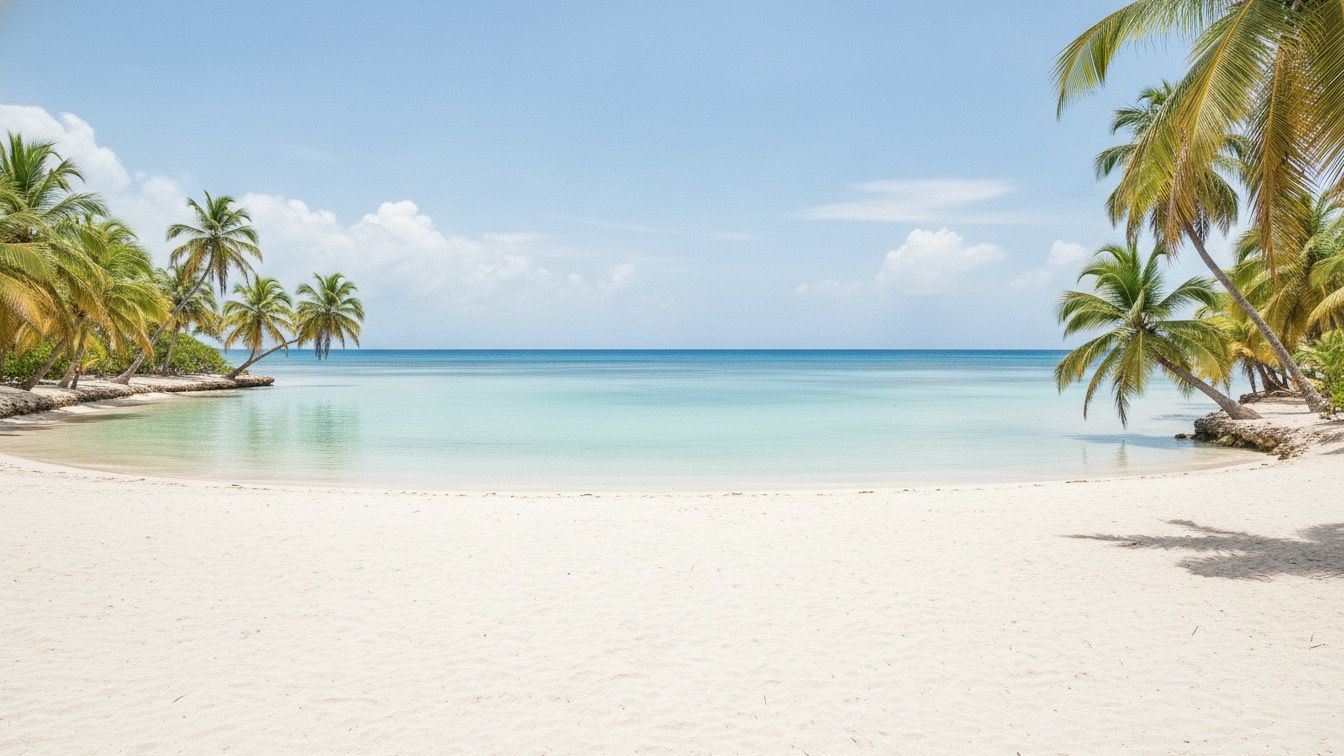
If you want a beach trip with no seaweed gamble, the reliable answer is the ABC islands: Aruba, Curacao, and Bonaire, which sit far to the south and west, off the coast of Venezuela and outside the main Atlantic sargassum current.
- Aruba. The standout. Its main beaches are on the calm western side, and it is only ever significantly affected roughly once a year. This is the single most reliable clear-beach destination in the Caribbean, it sits outside the hurricane belt too, and it is easy to reach. See our best all-inclusive resorts in Aruba and the best time to visit Aruba.
- Curacao. Its beaches sit along the sheltered south and west coasts and stay clear, swimmable, and largely seaweed-free year round.
- Bonaire. Cleaner than the belt by a wide margin, but with one caveat: its windward eastern side does receive regular sargassum that needs cleanup, so stick to the leeward west-coast beaches.
A few other reliably clean picks: the Cayman Islands, and the calm leeward coves of islands like Saint Lucia. For the full rundown, see our guides to the best Caribbean islands and the hurricane-free Caribbean islands, which overlap heavily with the seaweed-free list.
The silver lining: prices are dropping
Here is the part worth knowing before you write off the affected areas entirely. Because sargassum is scaring travelers off, resorts on the hardest-hit beaches are discounting aggressively, some by as much as 40 percent. If you are flexible, willing to book a resort that actively rakes and manages its beach, and you go in with clear expectations, there are genuinely cheap weeks available in places that are normally expensive.
The trade is simple: pay full price for a guaranteed-clear beach on Aruba or Curacao, or gamble on a discounted week in the Riviera Maya where the resort is fighting the seaweed daily. Neither is wrong. Just go in knowing which one you picked.
How to check any beach before you book
Sargassum moves week to week, so a beach that is buried today can be clear in ten days, and the reverse. Do not rely on a single old photo. Instead:
- Check a live sargassum tracker. Satellite-based trackers and regional monitoring sites show current and forecast conditions by area.
- Look at recent, dated social posts. Search the specific beach name plus the current month on TikTok or Instagram and sort for the newest posts. Real travelers post the truth.
- Ask the resort directly. Properties on affected coasts know exactly what their beach looks like today and whether they rake it daily. Ask before you pay.
- Favor leeward coasts and coves. Within any island, the Caribbean-facing side beats the Atlantic-facing side.
Frequently asked questions
Is sargassum dangerous? Usually not to your health, though the rotting seaweed releases a sulfur smell and can irritate people with respiratory issues. The bigger problem is that it makes the beach unpleasant and unswimmable where it piles up.
Which Caribbean island has the least seaweed? Aruba is the most reliable. Its beaches are on the calm western side and it is only significantly affected around once a year. Curacao is a close second.
Is it worth going to Cancun or Tulum in 2026? It can be, especially at a discount, but only if you book a resort that actively manages its beach and you accept that conditions vary week to week. Check a live tracker for your exact dates first.
Will 2026 really be the worst year ever? It is on track to be one of the largest on record. As of midsummer it was running just behind 2025, which holds the current record. Forecasts change through the season, so check the latest before you travel.
When is sargassum season? It generally runs spring through late summer, often peaking around May through August, though it varies year to year.
The bottom line
The record-seaweed headlines are real, but they are not the whole Caribbean. The seaweed follows the currents, which means Aruba, Curacao, and Bonaire's leeward coast stay reliably clear while Mexico's Caribbean coast takes the brunt. If you want zero risk, book the ABC islands. If you want a deal, the discounts on affected beaches are real, just verify your exact beach and dates on a live tracker first.
Conditions shift weekly. For a specific beach, always check a current sargassum tracker close to your travel date before you book.
Booking a group, or want a rate you will not find on Expedia?
I book as a travel advisor with access to agent-only pricing, resort credits, and group perks. Tell me your dates and I will price it against whatever you just saw.
Get my agent rateIncluded with Vacation Vault membership, $5.99 a month. Proposal within 24 hours.